AI Marketing World 2026: 7 Lessons I’m Keeping (and What I’m Leaving Behind)
On the first day of AI Marketing World 2026, I started an unofficial tally in my notes: how many times each speaker dropped the f-word on stage. One session hit ten.
No judgment here. I swear too, just not into a microphone in front of a room this size. If it fits your brand, own it. It’s not mine.
That tally stays private. The list I’m sharing here is the other one. Sixteen sessions, a Drive folder full of transcripts, a lot of good ideas, and a few I’m choosing to leave right where I found them.
This post is what I’m taking home. Each lesson credits the speaker who taught it. Each one also covers what it means if you run a service business and want AI to carry real weight without taking over.
Table of Contents
What Is AI Marketing World 2026?
AI Marketing World 2026 was a four-day in-person conference in Dallas in October 2026. It brought together marketers, coaches, agency owners, and builders who use AI in their businesses. You can see what’s coming next on the AI Marketing World site.
The sessions ran from AI agents and knowledge bases to cold outreach, paid events, video, and vibe coding.
1. Your Knowledge Comes First, and You Should Own It
AI can only work from what you’ve given it. Before you automate anything, write down how your business actually runs: your offers, your clients, your voice, and your decisions.
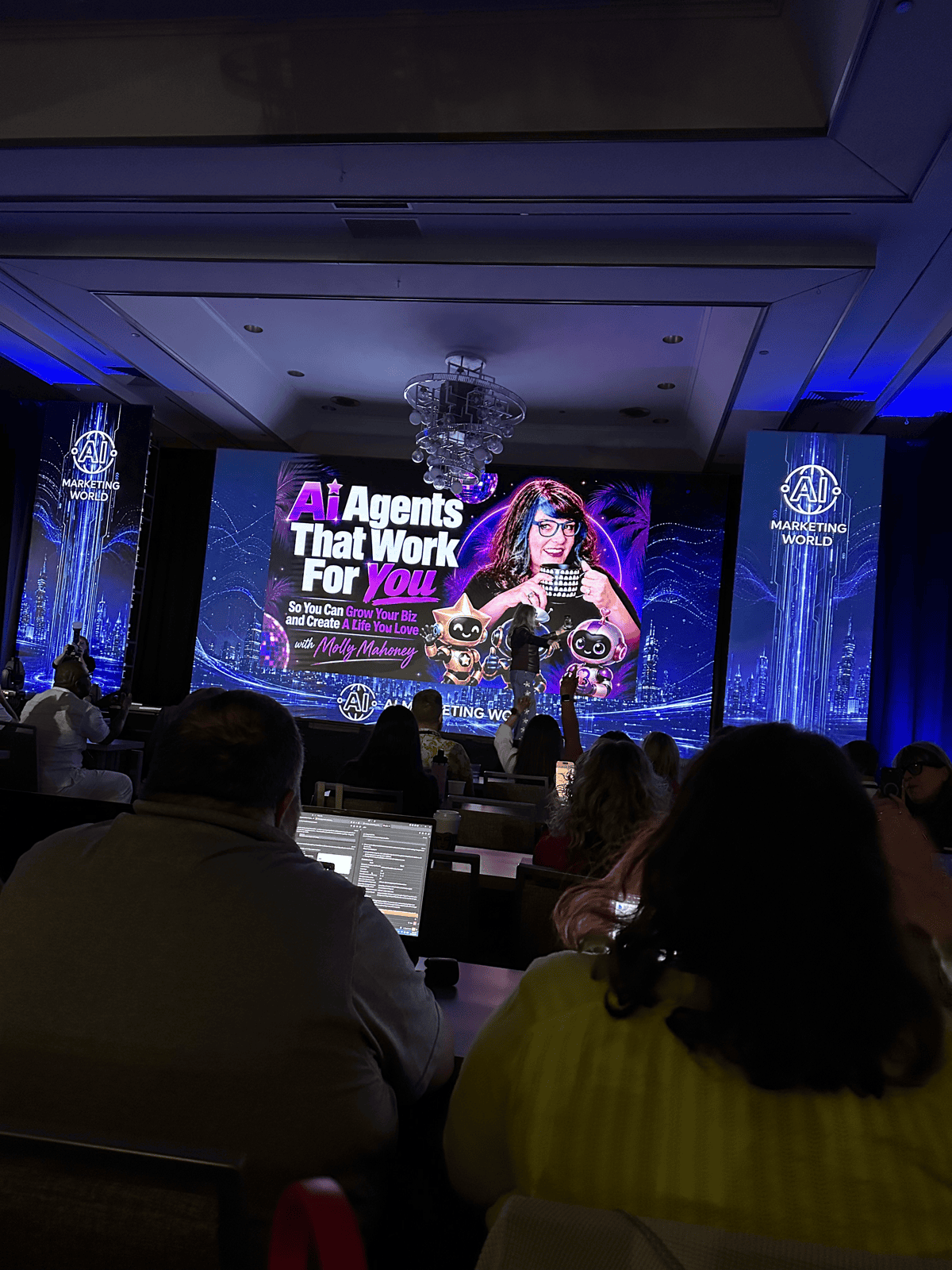
Molly Mahoney started Day 2 with this. AI without your strategy behind it just produces noise. Her method starts with a few foundation documents about your business, then builds AI helpers on top of them. Full transparency: I’m part of Molly’s community, and my own setup is built on her AI Soul System.
Jonathan Mast took it a step further. Keep what you know in plain files that you own, outside any one AI tool. Tools change. Your files stay. His line stuck with me: “You’re the curator. AI is the librarian.”
Your business knowledge is an asset. Keep it somewhere you control, in a format any tool can read, and the next tool change becomes a small move instead of a rebuild.
2. How Should You Train AI? Like a New Hire, With Someone Checking the Work
Onboard AI the way you’d onboard a person. Give it one job, the information it needs, clear limits, and a review.
Jeff J Hunter’s slides put it plainly: “AI didn’t fail you. Your onboarding did.” He sorts tasks into three groups. Green tasks the AI handles alone. Yellow tasks wait for your OK, which includes anything a client sees, any claim, and any price. Red tasks it never touches, like spending money or deleting things.
Jennifer Greer Bennett ran her process by hand for a full week before she let AI do any of it. That week taught the AI what “done well” looks like for her.
Abir Syed adds a second reader. One AI drafts the process. A separate one, with none of the drafting conversation, reads it cold like a new hire and lists what’s unclear. A tool that grades its own work in the same chat goes easy on itself.
So decide what your AI does alone and what waits for you. Then have something other than the writer check the work.
3. Every AI Step Has to Earn Its Place
Abir Syed’s talk filled more of my notes than any other session. His core question: “Everything you deploy needs an ROI. What value is being generated?”
If a simple step without AI does the job, use the simple step. AI belongs where it removes real load from your week.
He also tracks what goes quiet. Every scheduled task logs every run, even the runs where nothing happened. He only hears about it when a task fails to check in. Success messages are noise. Silence is the warning.
He had another line I wrote down twice: “It’s better to be reminded than taught.”
Automations fail quietly. You want to know one stopped before a client tells you.
4. AI for Service Providers: One Small, Real Result Beats a Pile of Freebies
The best lead magnet solves one small problem completely.
AJ Cassata ran a table talk on outreach, and this was the part I kept. A generic PDF is easy to make now, so it means less. A custom result means more: a quick audit, a short review, the first step of your actual process. Solve a tiny problem well. A weak freebie makes people wonder about your paid work.
Kaila Love agreed from a different angle. Give real value before you ask for an email. She also named the biggest mistake she sees builders make: overbuilding.
If you’re stuck on what to offer, start with the question clients ask you most. Answer it fully, for one person at a time.
5. Ask Before You Build, and Keep Iterating
Find out what people need before you build it. Then keep changing it as you learn.
Drew Griffin and Dave Calafiore said building is the easy part now and selling is the hard part. Their fix is to ask your own community what keeps getting in their way, then build that. Kaila Love said to show your idea to five real people. Zach Hesterberg said to test interest with a simple waitlist before you write a single sales page.
Jonathan Montoya added the part I loved to hear (I’m a self proclaimed “Iterationist”): “My offer is never finished.” He listens to the questions people ask live and adjusts the offer each time.
Your offer is allowed to be version one. Built to iterate is the whole point.
6. Show Up, Share What You Do, and Stop Counting People as Competition
The part AI can’t do is be you, in the room, with other people.
Chas Wilson stopped his keynote and had everyone text one person to say what that person means to them. No emojis. People read the replies out loud. His rule for the room was “Operate on agreement, not expectation.”
Keenya Kelly said it from the video side. People need to see your face and hear your voice. Nobody hires you because of a nice shot of your coffee.
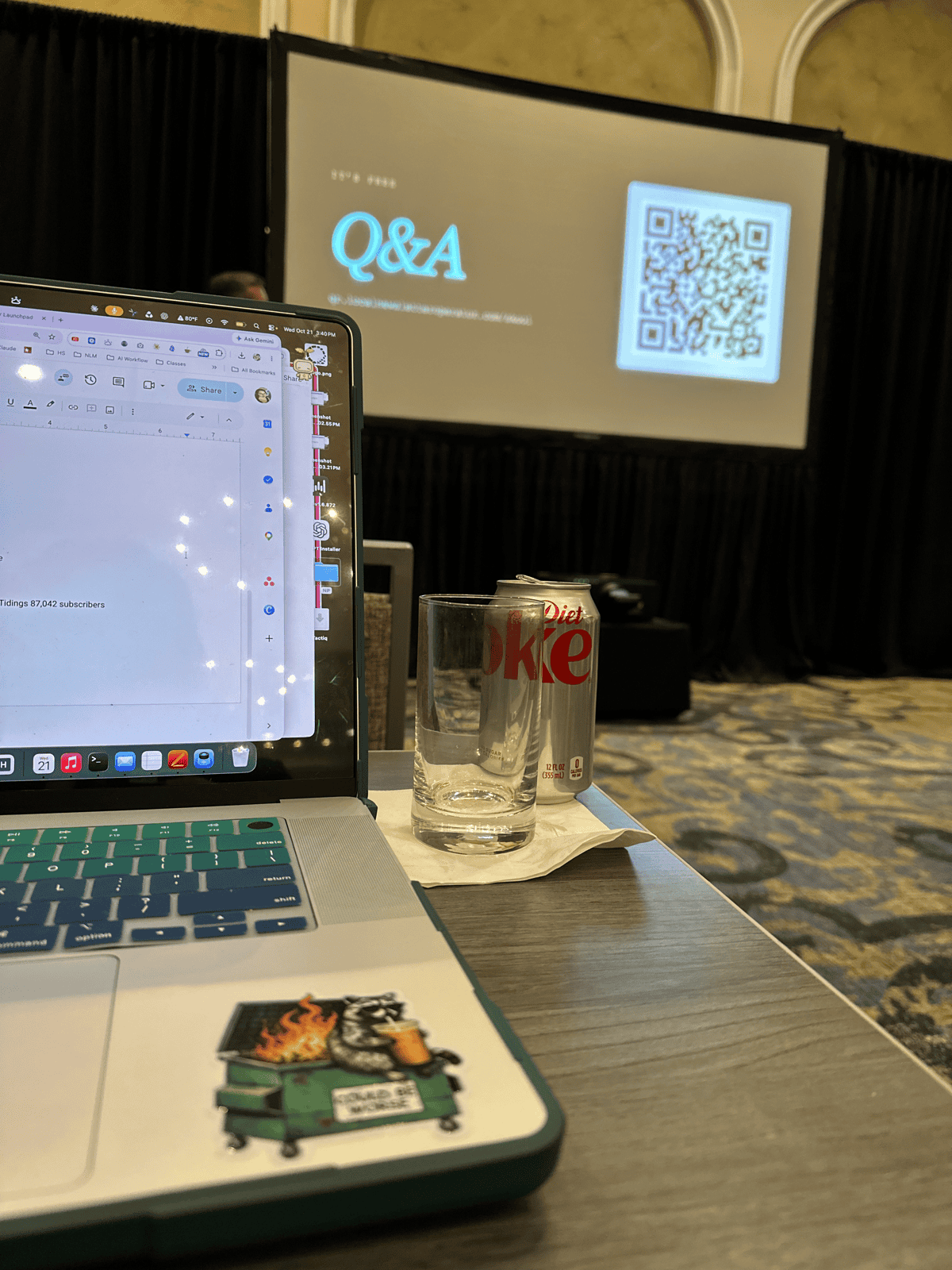
I met Nick Papp for the first time and told him what I do. He said he had no idea what that meant. It was confusing.
So I tried again: I help people build consistency into their business with automation and ai so it doesn’t all land on their shoulders. I loved that he was honest and pushed me to be clearer. Clarity is kindness, and it goes both ways.
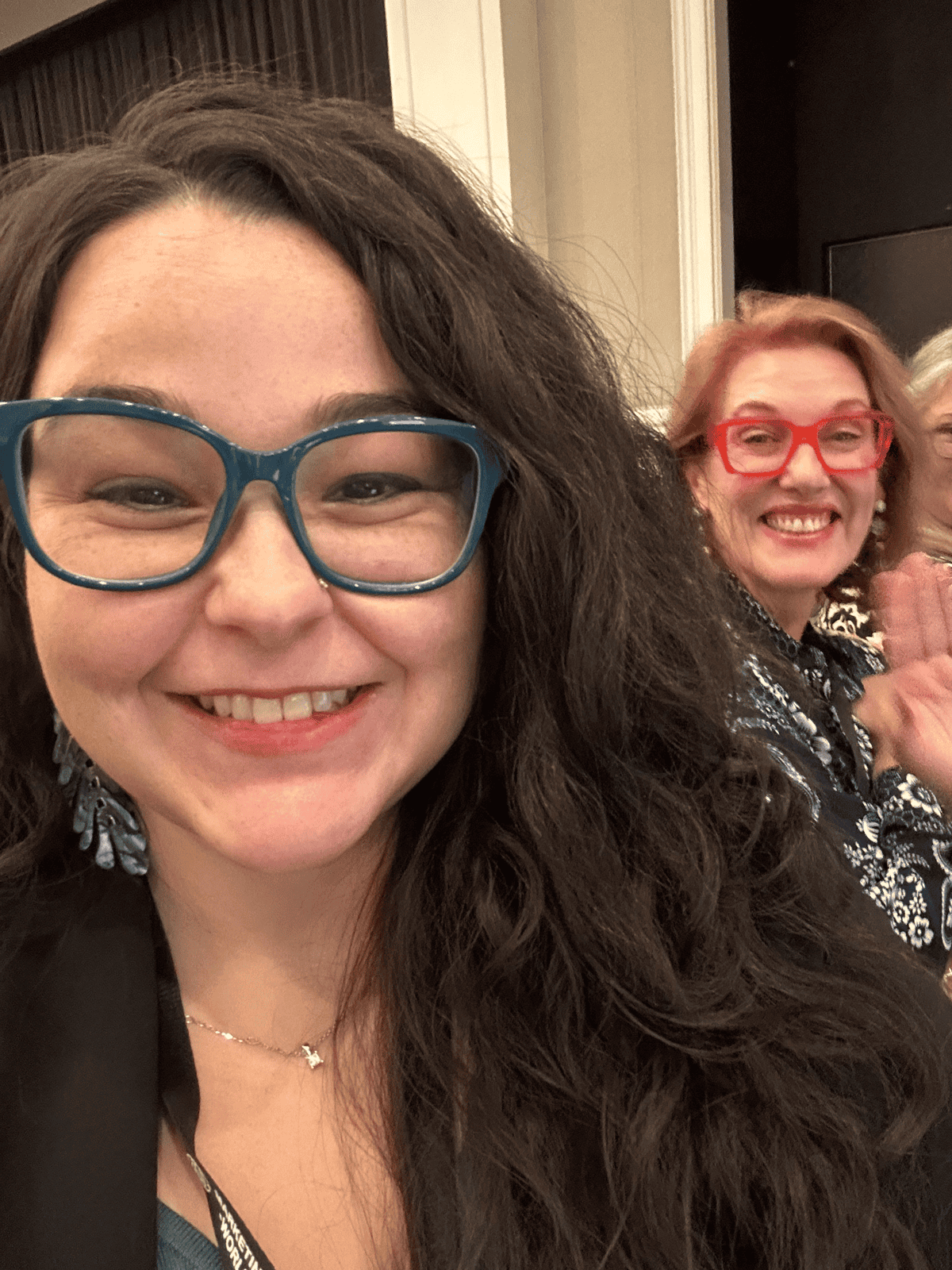
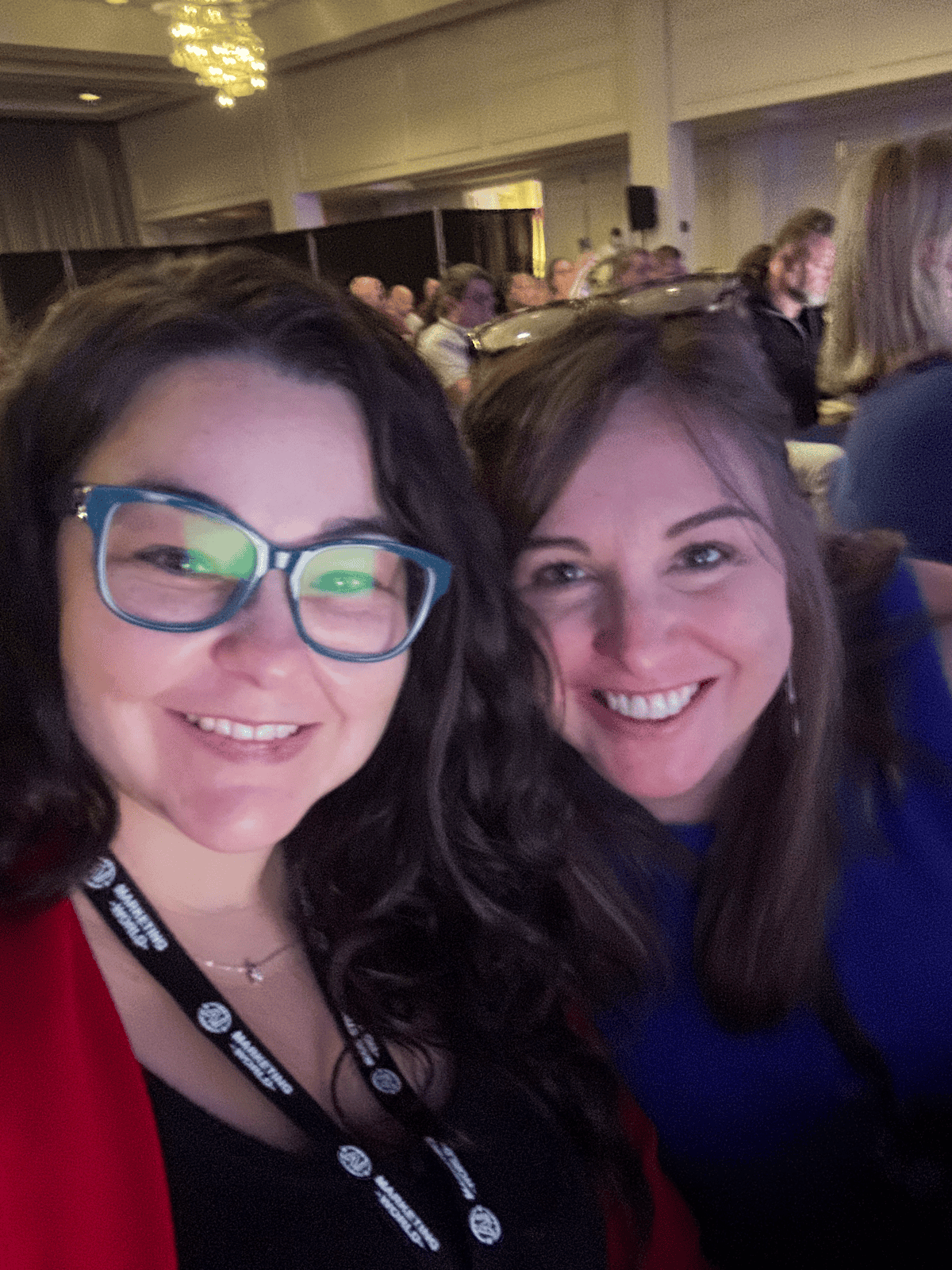
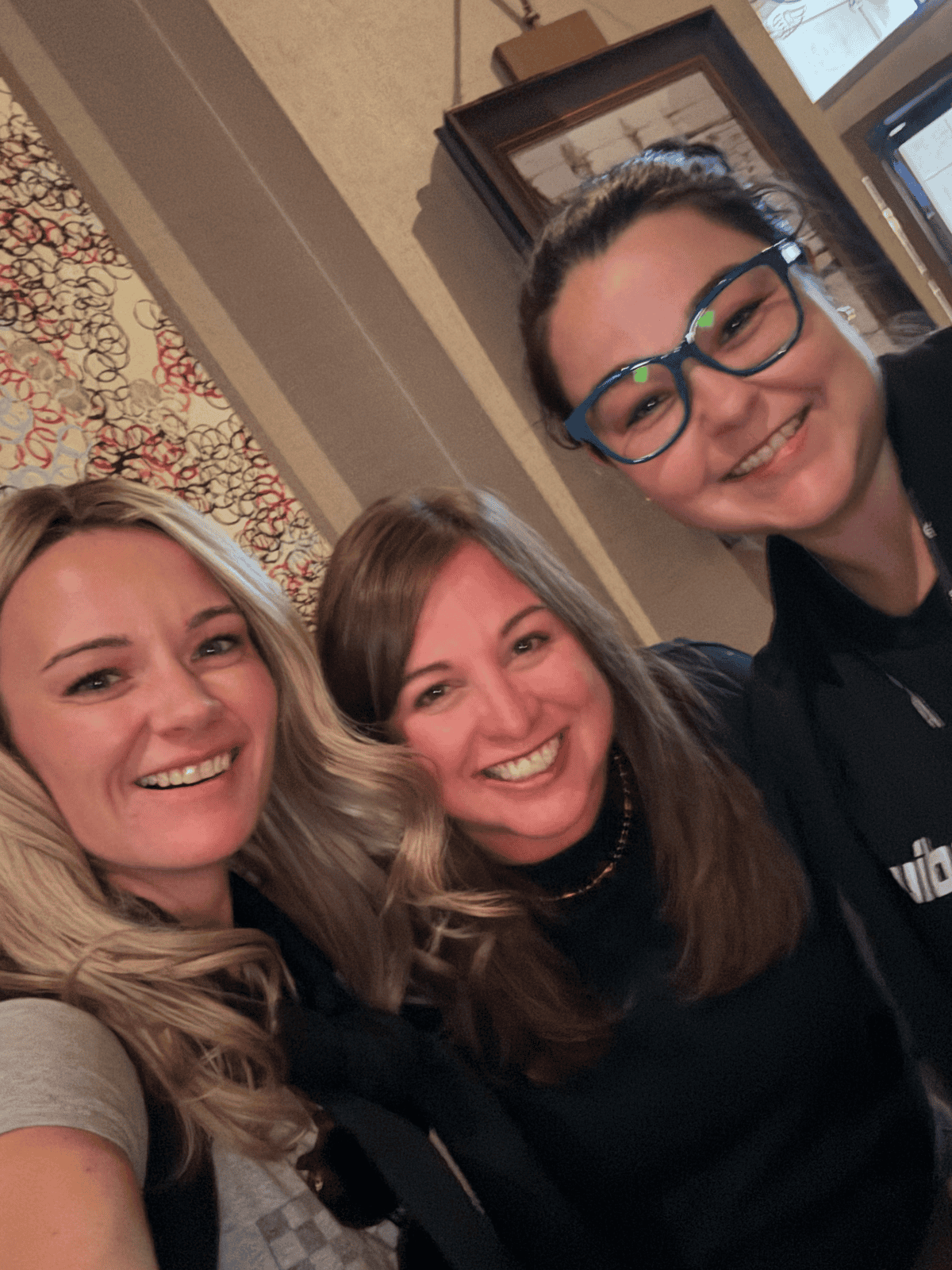
The people sitting next to me were coaches, agency owners, builders, and creators. Most of them serve people I never will. There is enough work and enough success for all of us.
Sharing what I do makes it easier for the right person to find me. It also makes it easier for me to send someone to the right person when I’m not the fit.
So go to the room. Say what you do in plain words. Treat the people you meet as possible partners and connect. Learn who they are as people. Share your value.
7. What I’m Leaving Behind: Ethical AI for Small Business
Some of what I heard doesn’t fit how I work, so it stays at the conference.
I’m leaving behind:
- Scraping other people’s group member lists to build an outreach list.
- Sending hundreds of DMs or cold emails at once, written by AI and timed to look human.
- Letting AI hold conversations as you without telling the other person.
- Voice clones and avatars passed off as the real person.
- Countdown timers that “close” an offer and quietly reopen it.
- Staged photos made to look like a crowd or a coaching session that never happened.
- AI-written content published with no human review.
- Every income claim I heard on stage. None of them were mine to check, so none of them are in this post.
I’m naming tactics here, not people. Most sessions had a mix of ideas I’ll use and ideas I’ll pass on. My filter is my ethical AI standard: a human makes the call, we tell the truth about AI, and no tool gets to pressure or trick anyone.
The risk is AI with no limits around it. Tools need parameters, not fear.
Who Gets the Stage, and Who Holds the Home
There’s one more thing I’m leaving behind, and it’s the one I’ve thought about most since.
Of the 17 speakers on the main stage, 5 were women. The table talks were closer to even. I want rooms like this to look more like the people actually building these businesses.
I also noticed a pattern in the stories. Man after man walked on stage, described a seven-figure-plus business, and mentioned his wife and kids at home. Then he talked about 4am alarms, nonstop grind, and a live webinar every single week.
I don’t know their families, and I’m not guessing at anyone’s marriage. But I do know what the research says about who usually holds the home.
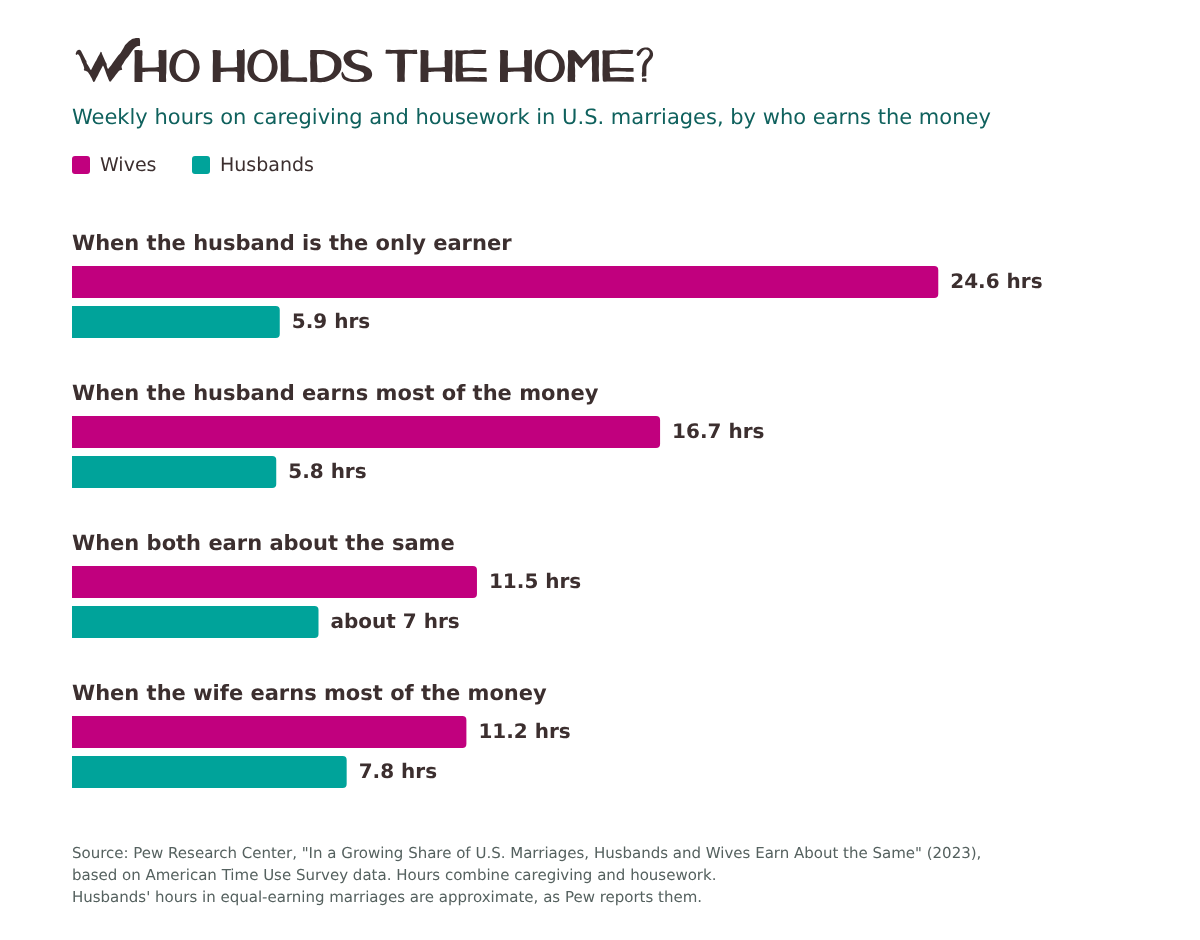
Pew Research Center looked at how married couples in the U.S. spend their week:
- When the husband is the only earner, wives spend about 14 hours a week on caregiving and 10.5 hours on housework. Husbands spend about 4.5 and 1.5.
- When the husband earns most of the money, wives spend about 9.4 hours a week on caregiving and 7.3 on housework. Husbands spend about 4.4 and 1.4.
- Even when both spouses earn about the same, wives still spend about 2 more hours a week on caregiving and 2.5 more on housework. Husbands get about 3.5 more hours of leisure.
- Even when the wife earns most of the money, she still spends more time on caregiving and housework than her husband, and he gets about 9 more hours of leisure each week.
The thinking work lands in the same place. In a study of 322 mothers of young children, mothers reported handling about 73% of the cognitive household labor: the planning, remembering, and keeping track (Archives of Women’s Mental Health).
A 4am success story usually has someone else running the house while it happens. When that work stays invisible, the model looks easy to copy. For a lot of the people I work with, it isn’t, because they’re the ones running the house and many times supporting it financially.
So I’m leaving that model behind. Your capacity matters, so let’s design for it. A business that only works when someone else carries your whole home was never built for the person doing the carrying.
What This Looks Like in Practice
Here’s what I’m putting in place from these sessions:
- A skeptic step. Every new process I write gets a second, cold read before I trust it.
- A missed-run alert. My scheduled tasks will log every run, and I’ll hear about it only when one goes quiet.
- A proof library. One place for every claim and result I can actually back up, so nothing I publish stretches the truth.
- Green, yellow, and red rules for each AI helper I use.
If your systems feel held together with duct tape and a prayer, start smaller than this. Pick one process. Write it down. Decide what AI does and what waits for you. For the bigger picture, this guide to simplifying your business systems walks through where to start, and the FOCUSED™ Framework shows how the pieces fit together.
Frequently Asked Questions
What was AI Marketing World 2026?
AI Marketing World 2026 was an in-person conference held in Dallas, Texas, in October 2026. It brought together marketers, coaches, agency owners, and builders to learn how to use AI in their businesses. Sessions covered AI agents, knowledge bases, outreach, video content, paid events, and building small software tools.
What was the biggest lesson from AI Marketing World 2026?
The biggest lesson was that AI only works as well as the knowledge and limits you give it. Several speakers said it in different ways. Write down how your business runs, and own those files. Train AI like a new hire, and keep a human in charge of anything a client sees.
How can a service provider start using AI without losing control?
Start with one process you repeat every week. Write down the steps, then decide which steps AI can do alone and which need your review. Keep anything a client sees, any price, and any claim in the review group. Add a second check before you trust the process.
Is it ethical to use AI for marketing?
AI can be used ethically in marketing when a person makes the final call, the content tells the truth, and no one is pressured or misled. That rules out fake reviews, scraped contact lists, undisclosed voice clones, and false countdown timers. Using AI with clear parameters is safer than avoiding it completely.
Are business conferences worth it for small business owners?
A conference is worth it when the people you want to work with or learn from are actually in the room. Go with a plan for what you will put in place afterward. The value often comes as much from the people you meet and the ideas you share as from the sessions.
Built to Iterate
Conferences are full of ideas. The work is choosing which ones fit your business and letting the rest go.
If you want to talk through what fits your business, join me at Built to Iterate, my monthly live webinar. The next one is Wednesday, November 18, 2026, at 2pm Central.
Nicole Phommanorat