Communicate Better with ADHD Clients: 5 Real Shifts
Your client went quiet for nine days. You sent the recap email, the action items, the deadline. Everything was clear on your end. When they resurfaced, they didn’t mention any of it. Not because they didn’t care. Because the email landed on a day their working memory had already maxed out by 10am.
Learning to communicate better with ADHD clients starts with understanding that clarity means something different when the person receiving it processes information on a different timeline. These five shifts are research-backed and practical enough to start using this week.
Why Standard Communication Breaks Down
Neurodivergent adults, including those with ADHD, often experience communication friction because of working memory differences, sensory sensitivity, and differences in social processing. Fast verbal exchanges, dense email threads, and real-time decision pressure create more friction than most service providers realize.
Harvard Business Review puts it plainly: asking neurodivergent people to adapt to neurotypical communication norms causes more harm than help. The most successful client relationships happen when both sides meet in the middle.
The International Coaching Federation found that inclusive communication practices, like offering multiple channels and building emotional safety into the process, create better outcomes for everyone involved, not just neurodivergent clients.
If you want to communicate better with ADHD clients, the starting point is adjusting your systems, not expecting them to adjust their brains.
5 Shifts That Build Trust
1. Let Clients Choose How They Communicate
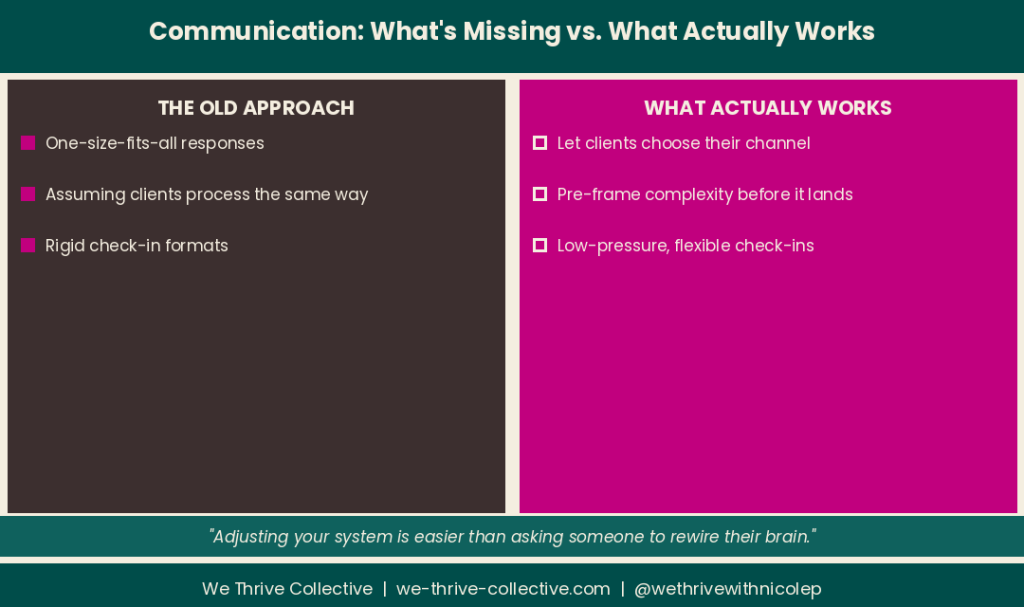
Some clients think best in writing. Others need to talk it through on a voice note. Some freeze on video calls but thrive over text. During onboarding, ask one question: “Do you prefer updates by email, text, or voice memo?” Then honor the answer.
Consistency in their chosen channel matters more than frequency. When clients can communicate in the format that matches their processing style, information actually lands.
2. Pre-Frame Complexity Before It Arrives
Many neurodivergent clients carry residual shame from past experiences where they felt behind or confused. Pre-framing reduces that friction. Before a complex phase of the project, say: “This next part has a few moving pieces. That’s normal. We’ll take it one step at a time.”
That small reframe changes the entire emotional tone of the interaction. It signals safety, not evaluation.
3. Use Predictable, Low-Pressure Check-Ins
Cadence matters more than intensity. Instead of long progress reviews, try brief reflective questions: “How is this sitting with you right now?” or “What feels heavy, uncertain, or clear this week?”
The goal is alignment and capacity, not performance review. That pause catches friction early and gives you both a chance to adjust before small issues compound. For a broader look at how this fits into your client process, building neurodivergent-friendly business systems covers the systems design side.
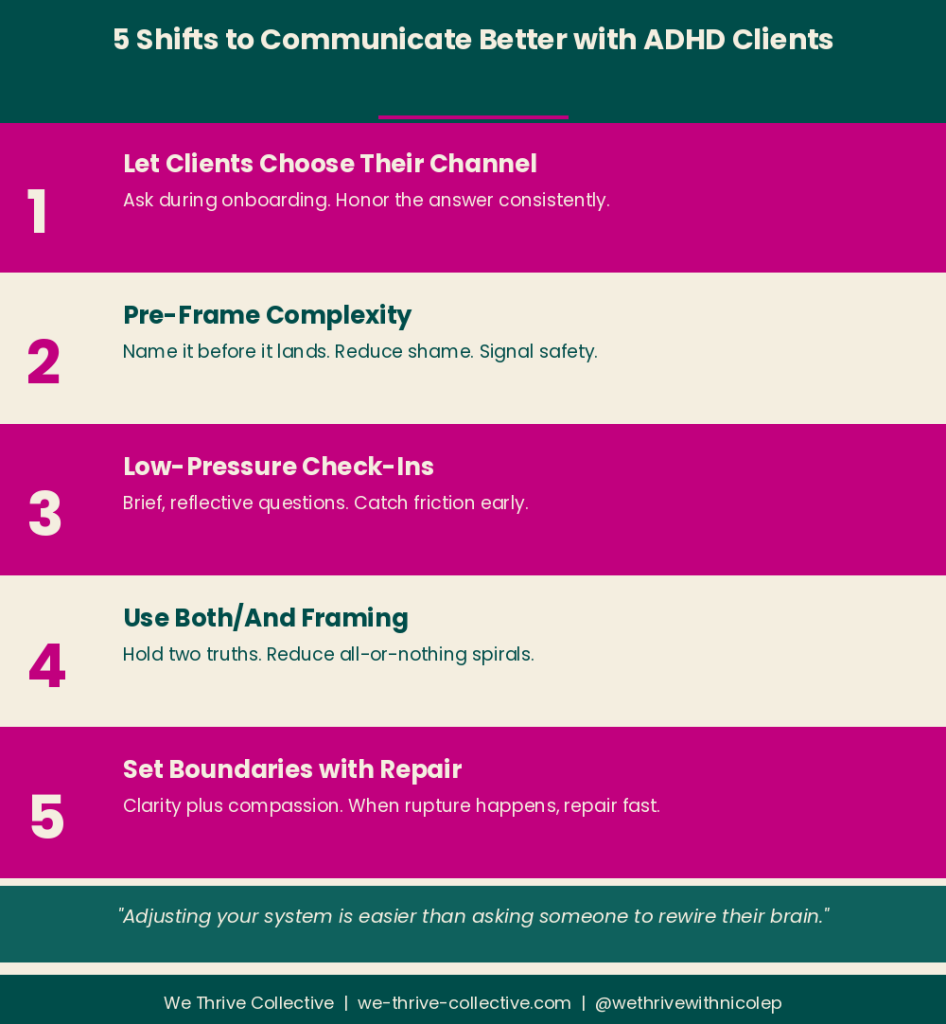
4. Offer Both/And Framing When Stress Spikes
Under stress, ADHD and other neurodivergent brains often default to all-or-nothing thinking. Holding two truths at once gets harder. Your job is to offer that framing when they can’t find it themselves.
“You can feel frustrated and still be doing solid work.” “The plan changed and it’s okay to re-evaluate.” This approach honors nuance and keeps the relationship grounded when things get uncomfortable.
5. Set Boundaries with Compassion and Repair Fast
Boundaries protect the project and the relationship. During onboarding, outline scope, how to request changes, and what happens if timelines shift. When rupture happens, and it will, repair fast.
Reflect what you heard. Validate the feeling. Own your part. Re-align with options. That four-step repair keeps trust intact even when the process gets messy. For a broader look at how inclusive communication connects to business design, inclusive design as a business strategy expands on the structural side. And for founders who want their client experience to match their energy, how clarity reduces overwhelm covers the internal shift that makes all of this sustainable.
Frequently Asked Questions
What is the biggest communication challenge for ADHD clients?
Working memory and processing speed differences often make it harder to track or recall complex conversations in real time. Structured pacing, written recaps, and predictable check-ins reduce that friction. The goal is making information accessible in the format that works for each client.
How do I onboard neurodivergent clients effectively?
Ask about their preferred communication channel during intake. Provide a clear scope document with timelines, definitions, and what “done” looks like. Pre-frame any complexity before it arrives. Build predictable check-ins into the workflow rather than relying on ad-hoc updates.
Should I tell my client I know they have ADHD?
Follow their lead. If they disclose, acknowledge it and ask what support looks like for them. If they haven’t disclosed, focus on building inclusive communication practices that benefit everyone. You don’t need a diagnosis to offer flexibility, clarity, and emotional safety.
What if a neurodivergent client goes silent for days?
Silence usually means overstimulation or processing time, not disinterest. Send a brief, low-pressure check-in: “Just checking in. No rush on a reply.” Avoid stacking follow-ups or escalating urgency. When they re-engage, pick up where you left off without drawing attention to the gap.
Can inclusive communication practices help neurotypical clients too?
Yes. Clearer scope documents, predictable check-ins, flexible communication channels, and compassionate boundary-setting improve every client relationship. Practices designed for neurodivergent clients reduce friction, build trust, and create smoother workflows for everyone.
The best client communication doesn’t require your clients to change how their brains work. It requires you to design a process that leaves room for how they already process.
Start with one shift. The one that would have made the biggest difference with your last client who went quiet.