

You wrote the Instagram caption three times. Deleted it twice. Posted a version that sounded like every other coach in your niche. Polished, safe, and disconnected from the thing you actually wanted to say. The version you erased was better. It was yours.
When you honor your unique perspective as a founder, the work stops feeling performative. Your decisions get clearer. Your audience recognizes something real. And the business starts reflecting the person behind it instead of a template.
Three ways your lived experience builds trust, connection, and a brand that lasts.
Why Founders Downplay Their Own Experience
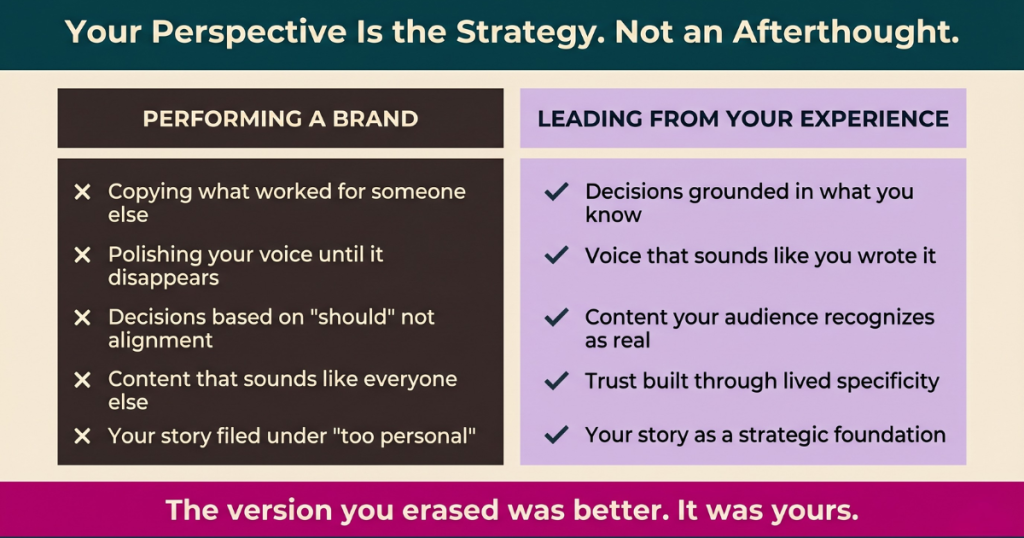
Most entrepreneurs are taught to look outward for answers. Follow the framework. Copy the funnel. Study what worked for someone else. Somewhere in that process, your own perspective gets filed under “not strategic enough” or “too personal to matter.”
Brené Brown’s research on vulnerability and connection shows that people trust authenticity over polish. The willingness to lead from your actual experience, not a curated highlight reel, is what creates lasting connection with clients and community.
Harvard Business Review reinforces this: authentic leadership builds organizational trust more effectively than expertise signaling. The same applies to small business. When your brand reflects who you actually are, the people who need what you offer recognize it faster.
When you honor your unique perspective, you stop performing authority and start building it from the ground up.
3 Ways Your Perspective Builds Trust
1. Your Experiences Shape Better Decisions
The problems you’ve solved and the lessons that cost you something real have shaped how you see options others miss. That accumulated perspective is not a personal aside. It’s your sharpest strategic tool.
When you build from what you know instead of what someone else prescribed, your decisions carry a specificity that generic frameworks can’t replicate. Clients feel the difference between advice that comes from a template and guidance rooted in real experience. The founder who has navigated the thing they’re teaching holds a credibility that no certification can manufacture.
2. Your Voice Strengthens Collective Solutions
When you share what you’ve actually learned, not the polished summary but the real version, you add depth that makes collective spaces richer. Communities built on curated highlights stay shallow. Communities built on honest perspective develop roots.
Your voice may be the one that names the thing everyone is thinking but nobody has said yet. That kind of contribution doesn’t require a large audience. It requires the willingness to say the specific thing instead of the safe thing. When your perspective is grounded in clarity about what you actually value, the words land differently.
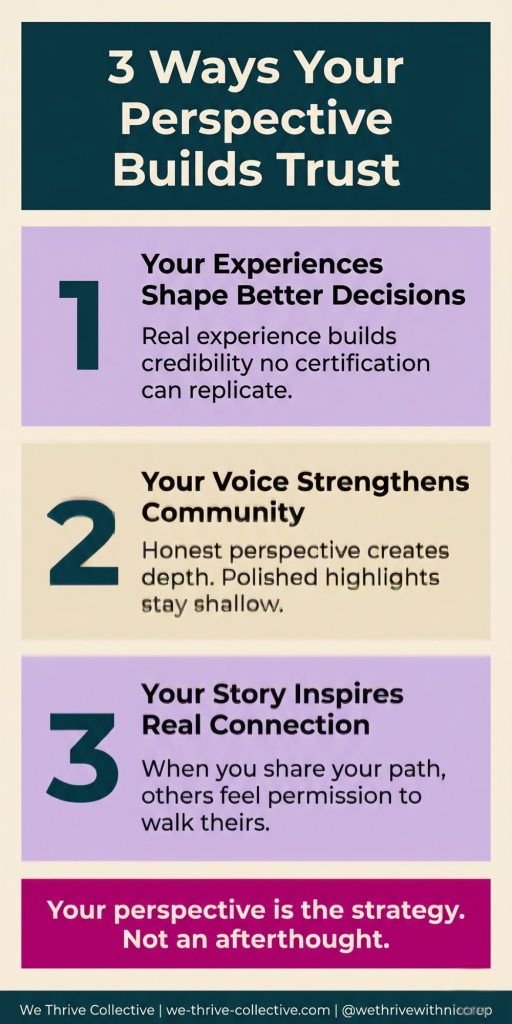
3. Your Story Inspires Others to Share Theirs
When you lead from your actual experience, you create space for other people to do the same. That ripple is not abstract. It shows up in the client who tells you “I felt like you were talking to me.” In the DM from someone who finally felt permission to do it their way.
Sharing your journey is not self-indulgence. It’s an invitation. And the founders who build their brand around that invitation attract clients who are aligned, not just interested. That kind of audience doesn’t need convincing. They need to feel seen.
For neurodivergent founders especially, building systems that reflect how your brain works is one of the most effective ways to honor your perspective at the operational level. And when your approach to growth matches your actual energy and capacity, designing change that fits you becomes the natural next step.
Frequently Asked Questions
What does it mean to honor your unique perspective in business?
Honoring your unique perspective means building your brand, decisions, and client work from your actual lived experience instead of copying someone else’s framework. It creates trust through specificity, attracts aligned clients, and produces a business that reflects who you are rather than a template of who you think you should be.
How does lived experience build trust with clients?
Clients trust founders who have navigated the problems they’re solving. When your guidance comes from real experience, it carries a specificity and credibility that generic advice cannot replicate. People feel the difference between a polished script and insight rooted in something real.
Can my personal story be part of my brand strategy?
Yes. Your story is one of the strongest brand differentiators available. No one else has your exact combination of experience, perspective, and values. When your story is woven into your messaging with clarity and intention, it becomes the foundation of a brand that attracts aligned clients.
How do I share my perspective without oversharing?
Share the insight, not every detail. Focus on what you learned and why it matters for the person reading. You don’t have to expose everything to be authentic. The goal is relevance and resonance, not a full memoir. Lead with the takeaway. Let the context support it.
Why does perspective matter more than credentials?
Credentials verify knowledge. Perspective reveals how you apply it. Clients connect with founders who understand their experience, not just their problem. A founder who has lived through the challenge they’re teaching holds an authority that goes beyond what any course or certification provides.
The thing that makes your work different is not a positioning trick or a brand exercise. It’s the perspective you’ve been carrying all along. The part you keep editing out is usually the part your audience needs most.
Next time you write something, post the first version. The one that sounds like you.