How to Stay Consistent in Business: 3 Honest Shifts That Make Coming Back Easy
You’ve tried the planners, the apps, and the 5 a.m. routine. None of them stuck. So you started to wonder if the problem was you.
If you want to know how to stay consistent in business, start here: consistency is the ability to return. You practice it every time you come back after a pause.
This post is the written version of my Built to Iterate™ webinar. I’ll walk through why trying harder stops working, three shifts that change how consistency feels, and the Return Without Reset™ loop I teach inside Functioning & Feral™.
Key takeaways
- Consistency is the ability to return. Coming back counts, every time.
- When a system only works on good weeks, pressure shows you a design problem.
- Shame pushes you away from your work. Small wins bring you back.
- Plan for the pause, and make the return easy.
- Your minimum winning action is the smallest step that still moves you forward.
What Does Consistency Really Mean in Business?
Consistency in business is the ability to return to your work after a pause, without starting over. It’s a skill you use again and again.
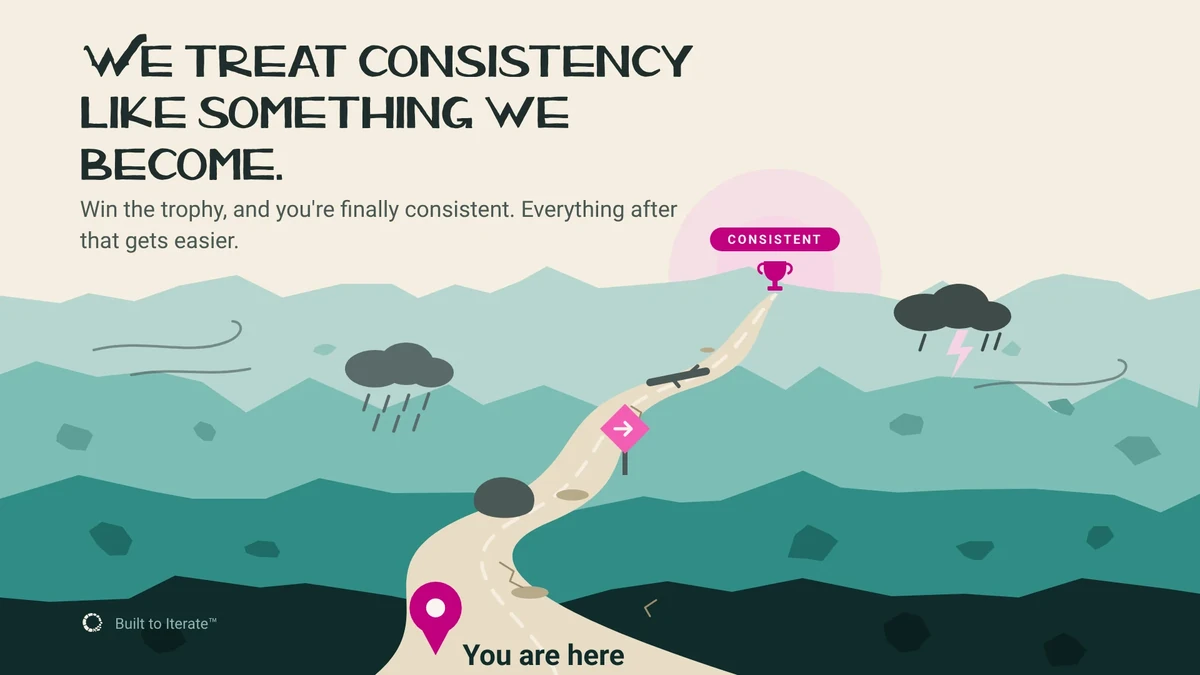
Many of us picture consistency as a trophy. You work hard for long enough, and one day you win it. You’re finally Consistent, with a capital C. Everything after that is supposed to get easier.
I used to see it that way too. While I was reworking my webinar, I wrote this down: “If they are like me they’ll have consistency propped up as my goal end state. It’s like the pursuit of nirvana, of the ultimate end goal, a north star to fix the way I am.”
That’s the catch. When consistency is a finish line, every pause turns into proof that something about you still needs fixing.
So here’s the definition I use now. Consistency is the ability to return. You stop, life happens, and you come back. That return is the consistency.
Research on habits points the same way. In a University College London study of 96 people building a new daily habit, it took 66 days on average for the habit to feel automatic, with a range from 18 to 254 days. Missing one day didn’t undo their progress. Skipping again and again did add up, which is why coming back matters more than never missing.
Why Trying Harder Stops Working
Look at what sits between you and that trophy. A sick kid. A client emergency. A week when your energy is gone. The road has weather on it, and a plan that ignores the weather won’t hold.
When we chase the trophy anyway, it usually turns into what I call the system fatigue spiral.
The system fatigue spiral
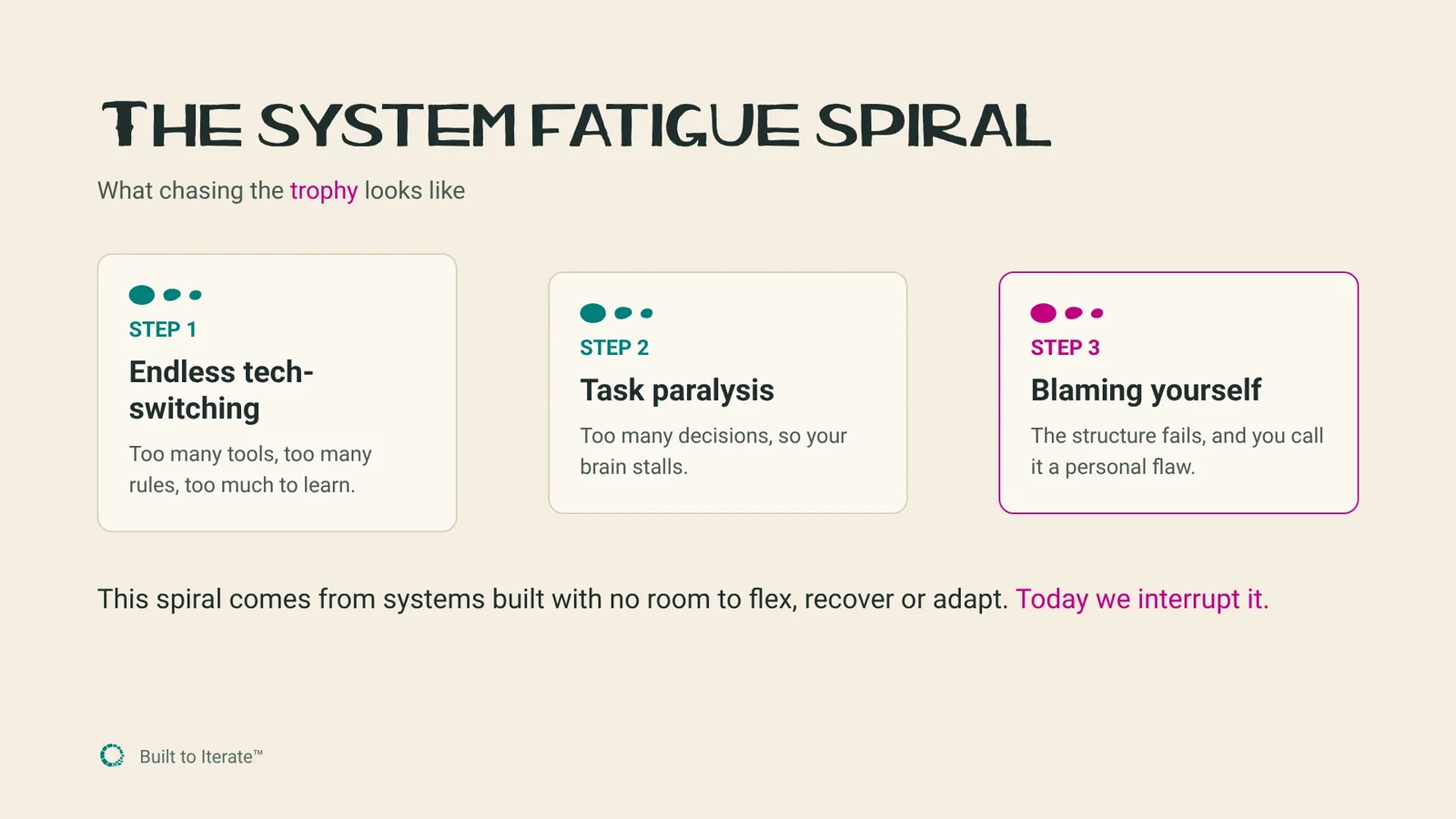
- Endless tech-switching. You try a tool, it doesn’t quite fit, and you switch again. Too many tools, too many rules, too much to learn.
- Task paralysis. Too many decisions pile up, and you stall.
- Blaming yourself. The structure fails, and you call it a personal flaw.
That third step does the most damage. Here’s the line I keep coming back to: if trying harder worked, it would have worked by now.
Pressure Shows You Where the Design Needs Work
Pressure is a normal part of running a business. Life keeps moving through. The trouble starts when your structure only works under perfect conditions.
A rigid structure is built for perfect weeks. Small disruptions pile up, your capacity dips, and the whole thing shuts down.
A flexible structure is built for real life. It bends when your energy shifts, and it keeps holding your progress.
Here’s how the two compare:
| Rigid structure | Flexible structure | |
|---|---|---|
| Built for | Perfect weeks | Real weeks |
| When your energy dips | Tasks pile up and the system stalls | You drop to your minimum winning action |
| After a pause | You start over | You pick up where you left off |
| What it runs on | Memory, willpower, and spare time | Reminders, routines, and a visible next step |
| How it feels | Proof that you fell behind | A place you can come back to |
Once you see that, the question changes. “How do I try harder?” becomes “How do I build this differently?” You don’t have a strategy problem. You have a structure problem.
Why Shame Makes It Harder to Come Back
When the trophy is about being worthy enough, many of us try to shame ourselves into growth. In my experience, that backfires every time.
Shame hurts, so we pull away from whatever caused it. The planner goes in a drawer. The CRM stays closed. The content calendar sits untouched for a month.
Pressure can get you moving for a short burst. Then you pull away again. Small wins work the other way. They give you a reason to come back.
Pulling away is a predictable response. Nothing about you needs fixing.
3 Shifts That Make Consistency Feel Different
- Mistakes are information. A mistake is a data point. It shows you what to adjust next time.
- Stopping is part of the system. Pauses are expected, so a pause stops being a crisis.
- Consistency is the ability to return. Coming back counts. Every time.
I learned the first one the hard way. I once ended up lying flat on my office floor, watching the ceiling fan spin and box-breathing through total frustration. I was juggling over half a dozen “important” projects, and the priorities shifted every week. I was polishing decks and dashboards that would never see the light of day.
The more I polished, the less I shipped. That’s where Built to Iterate™ started. Ship the simple version, learn from it, and make it better.
Return Without Reset™: How to Stay Consistent in Business After a Pause
Return Without Reset™ is a three-part loop. You can step back into it anytime. Your progress doesn’t expire.
- Pause. Energy dips. Life happens. A good system holds your place while you’re away.
- Return. Come back with one minimum winning action. No catch-up, no penance.
- Momentum. That small win starts the next loop, and you keep moving forward from where you are.
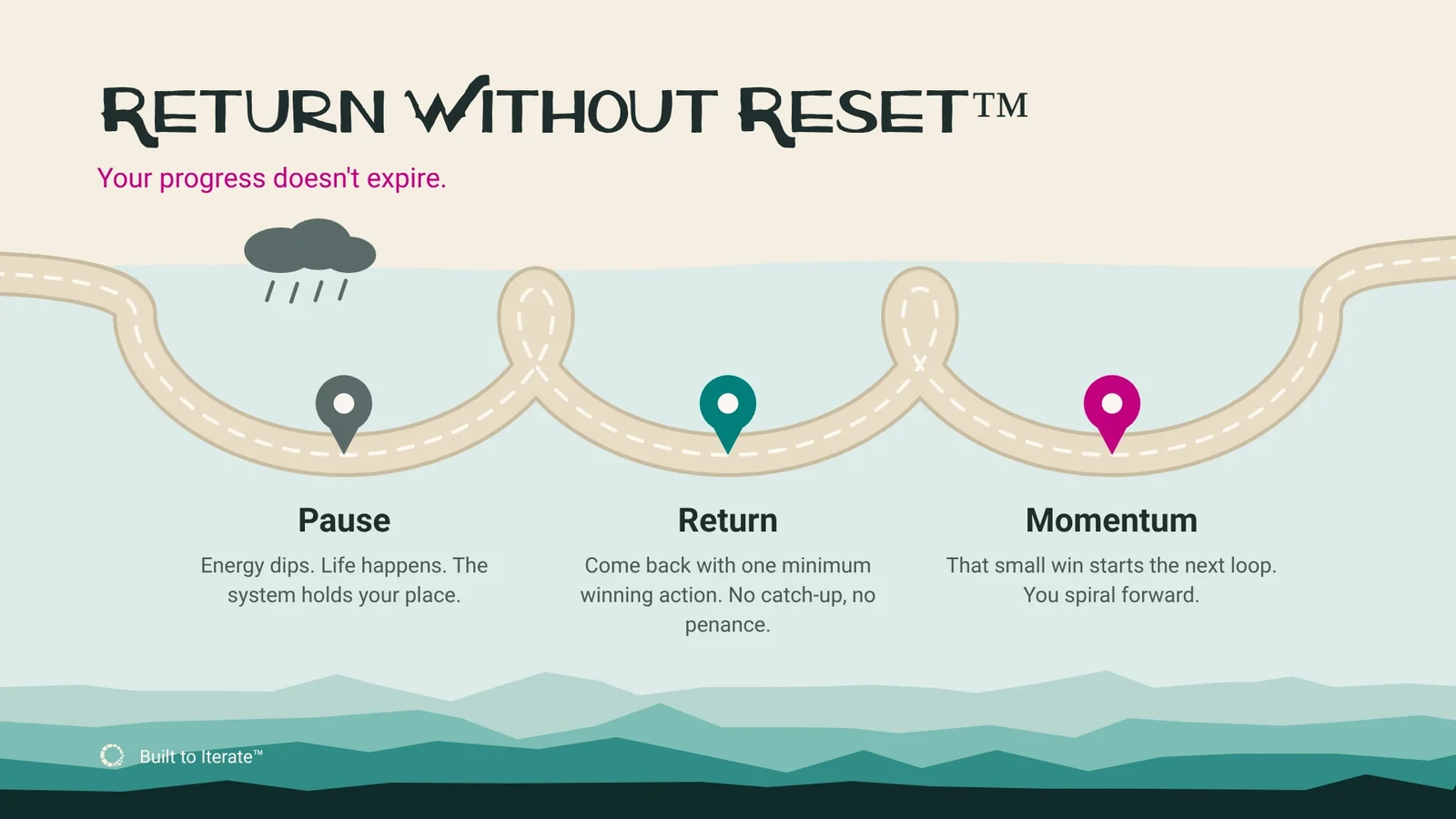
Picture a map with a “you are here” pin. Now picture pins all along the road. Wherever you stop is a place you can start again.
Your Minimum Winning Action
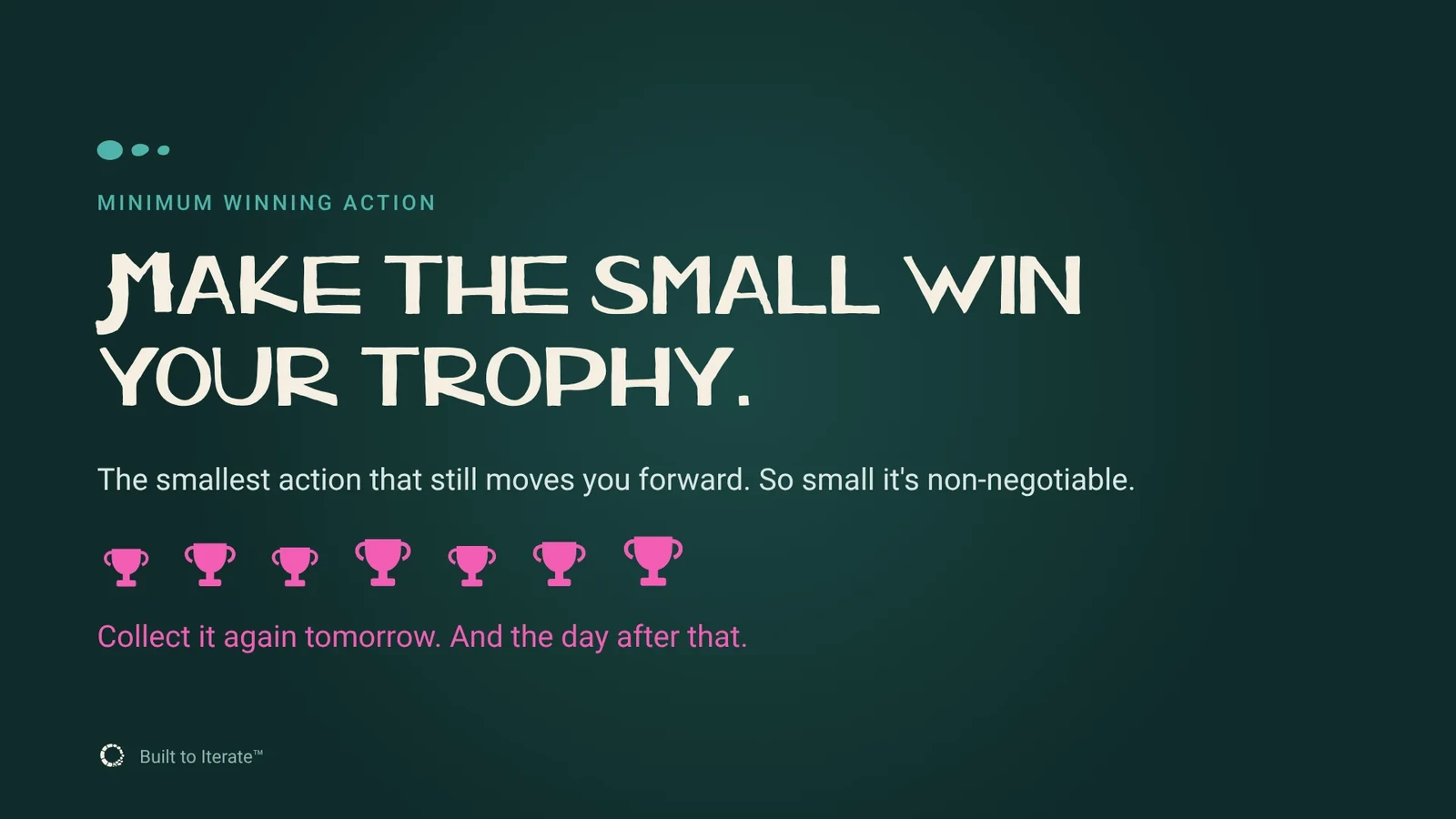
Keep the trophy. Just shrink it.
A minimum winning action is the smallest step that still moves you forward. Make it so small you can say yes on your worst day. Then collect it again tomorrow.
Here’s what that looks like next to the full version:
| Area | The full version | Your minimum winning action |
|---|---|---|
| Leads | Follow up with every open lead | Reply to one lead |
| Content | Write and schedule a week of posts | Write the first three lines of one post |
| Client records | Clean up your whole CRM | Open your CRM and update one contact |
| Planning | Map out the whole quarter | Block 15 minutes on Friday to look at next week |
| Money | Reconcile every transaction for the month | Send one open invoice |
A small win today will do more for you than a trophy you’re still chasing five years from now.
Give Your Small Wins a Place to Live
You already know a lot. You’ve taken the courses, saved the posts, and tried the tools. Knowing was never the hard part.
The hard part is the Tuesday when your energy is gone and nobody reminds you what your small win is. On those days, everything you know just sits there.
Infrastructure carries your strategy on the days you can’t. It holds your place when you pause. That might be a short weekly check-in, a CRM that reminds you who to follow up with, or a group you show up to every month.
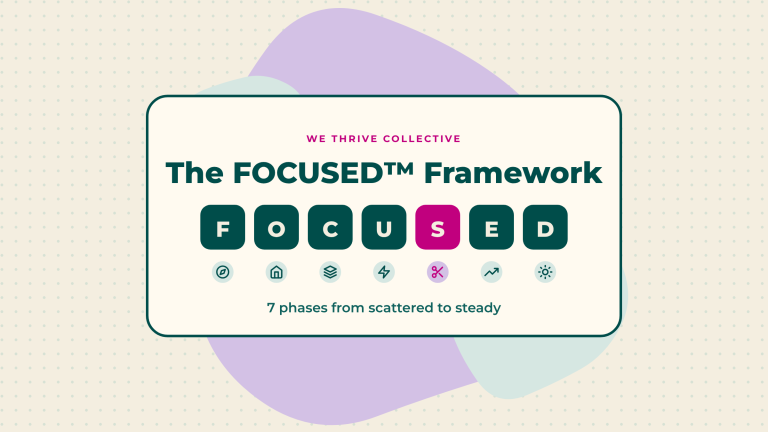
If your setup feels like too many moving parts, start with Simplify Business Systems: 4 Honest Steps. If you’re not sure you need a CRM yet, Do You Need a CRM? 6 Real Signs for Service Founders walks through it. And if you want a set of phases you can come back to anytime, the FOCUSED™ Framework works the same way.
Frequently Asked Questions
How do I stay consistent in business when my energy changes?
Plan for the pause before it happens. Pick one minimum winning action you can do on your lowest-energy day, and build a system that holds your place while you’re away. Consistency then means returning to that action, so a slow week stops counting as a failure.
What is returnability?
Returnability is the skill of coming back to your work without shame or a full reset. You pick up where you are, take one small action, and let that win restart your momentum. It treats pauses as a normal part of running a business, so coming back gets easier every time.
Why do my business systems stop working when life gets busy?
Many systems are built for perfect weeks. They depend on your memory, willpower, and spare time, so normal disruptions pile up fast. A flexible system expects busy weeks. It keeps your next step visible and makes it easy to return, even when you can only give it a few minutes.
What is a minimum winning action?
A minimum winning action is the smallest step that still moves your business forward. It’s small enough to do on your worst day, like replying to one lead or writing three lines of a post. Doing it again tomorrow builds momentum through small wins, one return at a time.
How long does it take to build a consistent habit?
There’s no set number. In a University College London study, a new daily habit took 66 days on average to feel automatic, and the range ran from 18 to 254 days. Missing one day didn’t undo the progress. Keep coming back to the same small action, and give yourself more time than you think.
Come Back as Many Times as You Need
Built to Iterate™ means a pause doesn’t erase your progress. You come back, collect one small win, and keep going.
Some days your business will feel solid and structured. Other days it’ll feel more organic. Either way, you can return.
If you want to work through this with me live, join the next Built to Iterate™ webinar. It’s a free 60-minute session I run every month: save your seat for the next one.
Nicole Phommanorat